
The internet was built around a simple assumption: people visit websites.
Search engines helped users discover those sites, browsers displayed them and businesses competed to convince human visitors to click, read, subscribe or buy.
Artificial intelligence could disrupt that relationship.
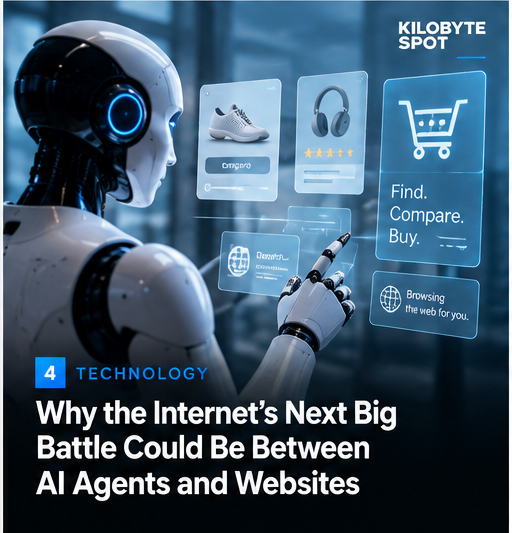
A new generation of AI agents is being developed to browse the web, compare products, analyse information and eventually perform transactions on behalf of users.
If the technology succeeds, websites may increasingly find themselves serving two very different audiences.
Humans—and machines acting for humans.
From Search to Delegation
Traditional internet search asks users to do much of the work.
Search for a product.
Open several links.
Compare specifications.
Read reviews.
Check prices.
Choose a retailer.
Complete the transaction.
An AI shopping agent could potentially compress that process into a single instruction:
“Find me the best laptop for video editing under my budget and buy it from a reputable retailer.”
The agent would then search, compare and potentially complete the transaction.
That sounds like a small convenience.
It could actually represent a major change in internet economics.
Retailers Are Preparing
Technology companies and retailers are already experimenting with agent-based commerce.
Anthropic, for example, has introduced blueprints designed to help retailers create shopping and merchant agents using Claude.
The move reflects growing interest in conversational product discovery and automated commerce.
But autonomous browsing remains imperfect.
Testing of current agents has found significant weaknesses in tasks such as completing transactions, filling forms and handling workflows across multiple browser tabs.
That means the fully autonomous shopping agent has not arrived yet.
The direction, however, is becoming increasingly clear.
Websites May Need to Impress Machines
Today’s websites are designed heavily around human behaviour.
Large photographs.
Promotional banners.
Product descriptions.
Navigation menus.
Calls to action.
An AI agent does not necessarily care about any of those things.
It needs structured, reliable information.
Price.
Availability.
Specifications.
Delivery.
Returns.
Reviews.
Compatibility.
An agent attempting to compare 100 laptops does not want to visually browse 100 beautifully designed product pages.
It wants trustworthy data.
That could make structured information increasingly important to businesses seeking visibility in AI-driven discovery.
The Search Business Could Be Disrupted
Search engines currently sit between users and much of the web.
Businesses spend enormous amounts of time and money optimising websites to appear prominently in search results.
AI assistants introduce another intermediary.
A consumer may ask an assistant for the best product and never visit a traditional search-results page.
The AI might examine multiple sources and provide a recommendation directly.
That creates a difficult question for publishers and retailers:
How do you attract traffic when the machine makes the decision before the user sees your website?
Search engine optimisation may therefore evolve alongside optimisation for AI discovery.
But simply manipulating AI systems will not be enough.
Agents making purchasing decisions will need accurate product information, strong reputational signals and reliable transaction infrastructure.
Marketplaces Could Become More Powerful
There is another possible consequence.
AI agents may favour large marketplaces.
Why?
Marketplaces already organise information in ways machines can easily understand.
Thousands of products.
Structured prices.
Customer reviews.
Seller ratings.
Payment systems.
Shipping information.
Return policies.
An independent retailer may have a better product but less structured information and fewer trust signals.
If AI assistants favour platforms where transactions are easiest to verify and complete, large marketplaces could become even more powerful.
Publishers Face Their Own Problem
The challenge extends beyond shopping.
Imagine asking:
“Tell me everything important that happened in technology today.”
An AI assistant could read information from multiple publications and summarise it without the user visiting those websites.
For publishers dependent on advertising, that creates an obvious problem.
The information remains valuable.
The visit disappears.
Technology publishers will therefore have to strengthen reasons for readers to come directly to them.
Original reporting.
Expert analysis.
Exclusive data.
Community.
Newsletters.
Events.
Tools.
Databases.
Brand trust.
In other words, content that cannot easily be replaced by a generic summary.
Why It Matters
AI agents could change the internet from a network where people manually navigate between websites into one where software increasingly negotiates with software.
Your agent communicates with a retailer’s system.
It checks availability.
Compares offers.
Verifies conditions.
Makes a recommendation.
Perhaps eventually completes the purchase.
Humans remain responsible for the objective.
Machines increasingly handle the journey.
What Happens Next
AI agents still have major technical and security problems to overcome.
Allowing software to autonomously browse is one thing.
Allowing it to spend money, disclose personal information or agree to contractual terms is considerably more sensitive.
Authentication, permissions, fraud prevention and accountability will therefore become critical.
But if those problems are solved, the implications could be enormous.
For more than 30 years, companies have competed to get humans to visit their websites.
The next internet battle may be about something very different:
convincing someone’s AI agent that your website is worth choosing.