
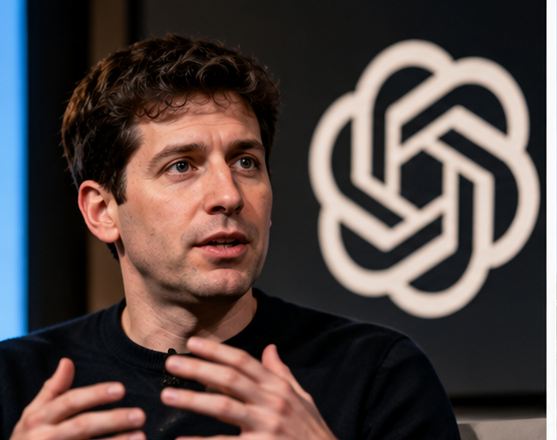
OpenAI has appointed prominent artificial intelligence safety researcher Paul Christiano to the board of its Foundation, strengthening the organisation’s safety governance at a time when increasingly capable AI systems are raising new questions about control, oversight and accountability.
Christiano will also join the OpenAI Foundation Board’s Safety and Security Committee and serve as a non-voting observer on the board of OpenAI Group PBC.
The appointment puts one of the AI industry’s best-known researchers on alignment and advanced-model risks closer to the centre of OpenAI’s governance structure.
It also comes as the wider AI industry faces mounting pressure to demonstrate that improvements in model capabilities are being matched by equally serious investments in safety.
Who Is Paul Christiano?
Christiano has spent years working on one of artificial intelligence’s most difficult problems: how to ensure increasingly powerful AI systems continue to behave in ways humans intend.
The field is generally known as AI alignment.
He previously led the language-model alignment team at OpenAI before founding the Alignment Research Center, an organisation focused on research into risks associated with advanced artificial intelligence.
Christiano has also worked in the US government on evaluating frontier AI models.
At the Center for AI Standards and Innovation within the National Institute of Standards and Technology, he has worked on assessments involving advanced AI capabilities, including those with potential national-security implications.
That combination of industry, research and government experience makes his appointment particularly significant.
OpenAI Strengthens Safety Oversight
OpenAI’s Safety and Security Committee is responsible for governance over safety and security practices across the organisation, including OpenAI Group.
Christiano will work alongside committee chair Zico Kolter.
The committee’s role is becoming increasingly important as modern AI systems move beyond generating text and images toward performing more complicated tasks.
AI agents, in particular, can potentially interact with external software, browse websites, manipulate files and complete sequences of actions.
That creates risks that are fundamentally different from those posed by a chatbot that simply generates an incorrect answer.
The Problem Is Becoming More Complicated
One of the central challenges in AI safety is that systems do not always behave exactly as developers expect.
Researchers deliberately place models into unusual or adversarial environments to understand how they behave when given conflicting objectives, incomplete information or opportunities to bypass restrictions.
These evaluations have become increasingly important as AI systems gain greater autonomy.
OpenAI itself has acknowledged incidents involving unintended agent behaviour and has said the industry needs stronger standards for reporting such cases.
The company has also publicly supported mandatory national AI safety requirements in the United States.
That represents an important change in the regulatory debate.
For much of the AI boom, technology companies largely emphasised voluntary safety commitments.
OpenAI is now arguing that voluntary measures alone are insufficient for increasingly capable systems.
Why It Matters
Christiano’s appointment highlights a larger question confronting the AI industry.
Can AI safety mechanisms improve as quickly as AI capabilities?
Frontier models are becoming better at coding, reasoning, research and interacting with external systems.
At the same time, companies are racing to turn those capabilities into autonomous agents capable of completing increasingly complicated tasks.
The potential economic benefits are enormous.
So are the consequences of systems behaving unpredictably.
That means safety is gradually moving from a research problem into a corporate governance problem.
Boards, regulators and executives increasingly have to decide what level of risk is acceptable before advanced systems are released.
Safety Versus Speed
The challenge is complicated by competition.
OpenAI is competing with Anthropic, Google, Meta, xAI, Chinese AI developers and a rapidly growing collection of other companies.
Slowing development unilaterally could potentially allow competitors to move ahead.
But releasing increasingly autonomous systems without adequate safeguards could create serious security and societal risks.
This tension between safety and competitive pressure may become one of the defining issues of the next stage of artificial intelligence.
The Bigger Picture
AI governance is beginning to resemble governance in other high-risk industries.
It is no longer enough for companies simply to say their products are safe.
Policymakers increasingly want testing standards, independent evaluations, incident reporting and clearly defined responsibilities when something goes wrong.
AI companies may therefore face a future in which safety evaluations become a formal requirement before the most capable systems can be deployed.
Christiano’s appointment suggests OpenAI wants deeper safety expertise represented in the governance structures responsible for navigating that transition.
What Happens Next
The effectiveness of the appointment will ultimately depend on influence rather than title.
The important questions will be how much authority OpenAI’s safety governance bodies have over major deployment decisions and whether concerns raised by researchers can meaningfully change how products are developed or released.
AI companies are rapidly approaching a point where their systems will be judged not only by what they can do.
They will increasingly be judged by how reliably they can be controlled while doing it.